Human-in-the-Loop AI: Why Good Business Automation Still Needs People
Kort sammanfattat
Human‑in‑the‑Loop AI combines automated lead triage with human decision points, enabling Swedish VVS contractors to reduce manual effort, improve conversion rates, and prevent revenue leakage while maintaining the personal touch customers expect.
TL;DR
- HITL AI lets VVS contractors automate routine lead triage, keep human judgment for critical decisions, and cut manual effort by up to 90 %.
Human‑in‑the‑Loop Automation: Why VVS Contractors Still Need People Behind the Screen
When a Swedish plumbing installer receives an inbound call or web form, the goal is clear: turn that inquiry into a booked job and, eventually, cash. In practice, many small firms lose up to 30 % of potential revenue because their follow‑up remains manual and reactive. Human‑in‑the‑loop (HITL) automation offers a middle ground—machines handle routine triage while humans intervene at the decision points that matter most.
1. The Anatomy of a HITL Workflow for Lead Follow‑Up
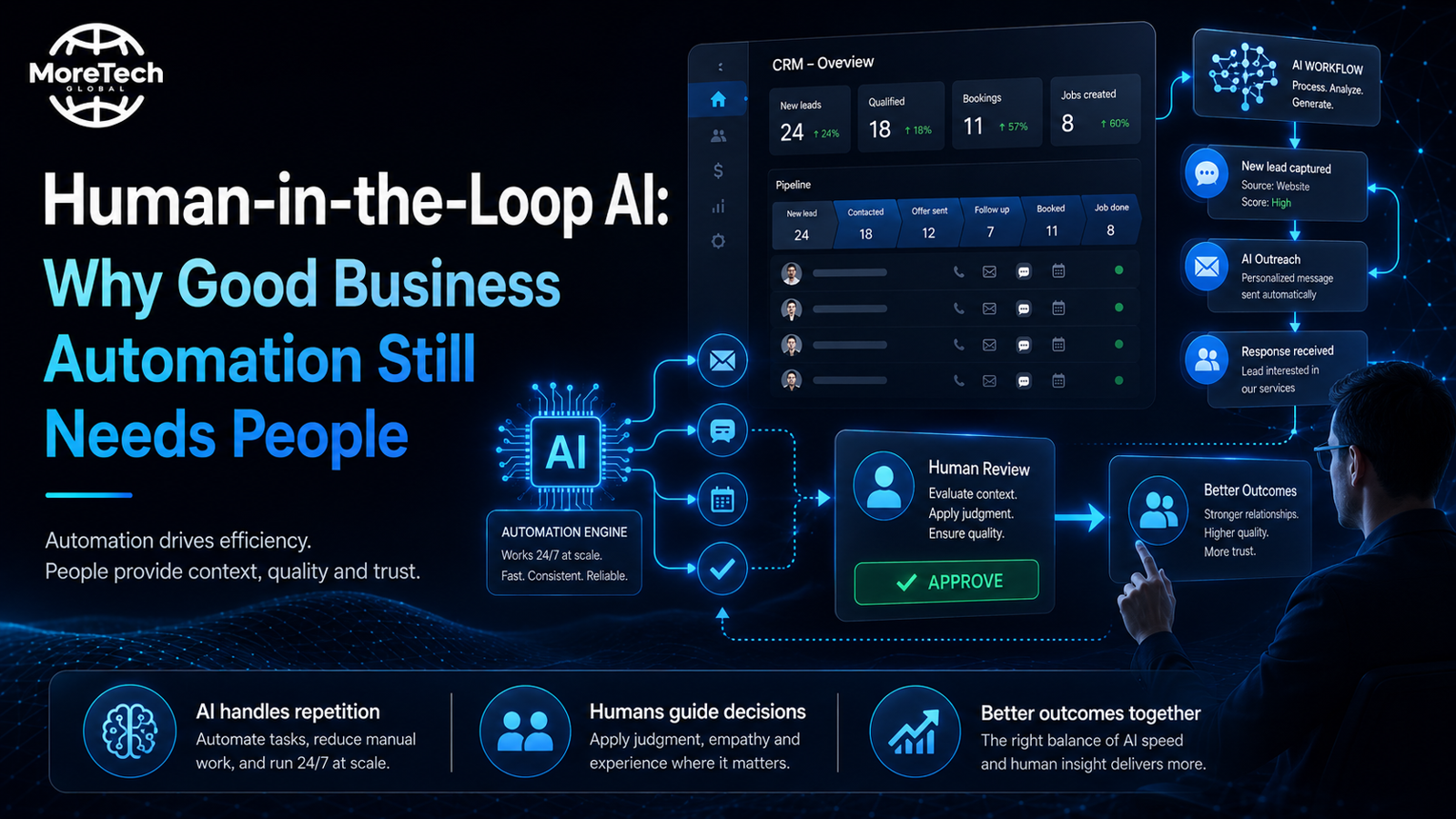
A typical HITL lead‑management loop looks like this:
- Capture: Phone call or web form feeds data into a central system.
- Automated Triage: An AI model scores the lead on urgency, budget fit, and service type.
- Human Review Point: If confidence < 80 % or the lead is high‑value, the workflow pauses for a technician to verify details.
- Action: Approved leads trigger an automated email/SMS with a booking link; rejected ones receive a polite decline note.
- Feedback Loop: Human decisions feed back into the AI model, improving future triage accuracy.
This structure keeps human effort focused on the 10 % of leads that truly require judgment—exactly where small VVS teams have the most impact.
2. Why Full Automation Fails in the Swedish VVS Market
- Cultural Nuance: Swedish customers often expect a personal touch; an automated reply can feel impersonal and lead to lost trust.
- Regulatory Constraints: Certain service agreements require signed consent or specific documentation that only a human can verify.
- Complex Service Bundles: A single call may involve multiple installations (e.g., heating + bathroom renovation). Machines struggle to map all permutations without oversight.
3. The Cost of Ignoring HITL: A Quantitative Snapshot
A 2026 study by Software Oasis found that 90 % of tasks in human‑loop processes are AI‑handled, yet the remaining 10 %—the critical decision points—drive most revenue outcomes. For a 15‑person VVS firm, this translates to:
- ~3 hours per week spent on manual lead qualification.
- Potentially 2–3 jobs lost each month due to delayed or incorrect follow‑up.
At an average job value of SEK 25 000, that’s a monthly leakage of roughly SEK 50 000—well beyond the cost of a lightweight HITL tool.
4. Building a Low‑Cost HITL System with Existing Tools
- Select a CRM with Workflow Automation: Many Swedish installers use simple CRMs (e.g., HubSpot, Pipedrive). Ensure it supports conditional logic and task assignment.
- Integrate an AI Triage Layer: Use a lightweight Python script or a no‑code platform like Make.com to score leads based on keywords (“heating”, “pipe leak”) and metadata (location, urgency).
- Define Human Review Triggers: Set thresholds—e.g., if the score is below 70 % or the job size exceeds SEK 30 000, route to a technician’s inbox.
- Automate Follow‑Up Emails: Once approved, trigger a templated email with a booking link and calendar integration.
- Close the Loop: Log human decisions back into the AI model for continuous improvement.
5. Trade‑Offs: When to Let Machines Decide
Not every lead needs a human touch. Consider these guidelines:
- Low‑Value, High‑Volume Leads: If the job is under SEK 10 000 and the customer has no special requirements, full automation saves time.
- High‑Confidence Scores: A confidence level above 90 % can be safely auto‑approved.
- Time‑Sensitive Inquiries: For “emergency” calls, an automated SMS with a direct booking link ensures rapid response while the technician reviews details later.
6. Measuring HITL Success in Your VVS Business
Track these KPIs to gauge ROI:
- Lead Response Time: Target < 30 minutes from inquiry to first contact.
- Conversion Rate: Compare booked jobs before and after HITL implementation.
- Human Review Load: Aim for a 90 % reduction in manual triage hours.
- Revenue Leakage Reduction: Measure monthly revenue lost to missed leads; a 20–30 % drop is realistic within six months.
7. Common Pitfalls and How to Avoid Them
- Over‑automation of Sensitive Data: Never let AI handle personal data without explicit consent—this violates GDPR.
- Ignoring Feedback Loops: Without human input feeding back into the model, accuracy will plateau or decline.
- Underestimating Change Management: Train staff on new workflows; a 15 % productivity dip is normal during transition.
8. Next Steps for Your VVS Firm
1️⃣ Audit your current lead‑follow‑up process: map each step and identify manual bottlenecks.
2️⃣ Choose a lightweight HITL platform—Make.com or a simple Python script can suffice.
3️⃣ Pilot the workflow with 10 % of incoming leads; monitor KPIs for two months.
4️⃣ Scale up once you hit your target response time and conversion rate.
By embedding human judgment into automated workflows, Swedish VVS contractors can cut manual effort by up to 90 %, reduce revenue leakage, and keep the personal touch that customers value. The future of small‑business automation isn’t about replacing people—it’s about empowering them with smarter tools.
Related Articles
Sources
- Future of Human-in-the-Loop AI (2026) - Emerging Trends & Hybrid Automation Insights | Parseur®
- Why Plumbers Lose $15k/Month to Missed Calls and Poor Scheduling | Vocaly AI
- Unit 2: Speeds, Feeds, and Tapping – Manufacturing Processes 4-5
- Automatic Triage of 12-Lead ECGs Using Deep Convolutional Neural ...
- Manual vs Automated Lead Qualification: Which Works Better? — LeadBoxer
Related reading
Vanliga frågor
What is Human‑in‑the‑Loop AI in the context of VVS contractors?
It is an automation approach where AI handles routine lead triage and humans intervene at critical decision points, ensuring efficient lead follow‑up while maintaining a personal touch.
Why does full automation fail for Swedish VVS firms?
Because Swedish customers expect personal interaction, regulatory constraints require human verification, and complex service bundles are hard for machines to map without oversight.
How much revenue can a VVS firm lose by ignoring HITL?
A 15‑person firm can lose about SEK 50 000 per month due to delayed or incorrect follow‑up, far exceeding the cost of a lightweight HITL tool.
What tools can build a low‑cost HITL system?
Use a CRM with workflow automation (HubSpot, Pipedrive), integrate an AI triage layer via Python or Make.com, set human review triggers, automate follow‑up emails, and log decisions back into the AI model.
How do I measure HITL success?
Track KPIs such as lead response time, conversion rate, human review load, and revenue leakage reduction; aim for a 90 % reduction in manual triage hours and a 20‑30 % drop in revenue leakage within six months.